
The Sounds Your Steering Wheel Makes Can Reveal a Lot—Here’s What They Mean and What to Do Next.
A whining, groaning, or squealing noise when you turn your steering wheel can be jarring—especially if it seems to get louder over time. These sounds are among the most common early warning signs that something is wrong with your power steering system, and ignoring them can lead to expensive repairs or even unsafe driving conditions. If you’re hearing strange noises while navigating curves or parking at low speeds, it’s essential to understand what’s causing them and how to fix them quickly.
This guide explains the most common reasons for steering noise, what these symptoms usually indicate, and how to get expert power steering repair in Vancouver, WA, to restore smooth, quiet steering. By the end, you’ll know precisely what causes whining or groaning, how serious it is, and what to do next—especially if you live in Vancouver.
What Causes Steering Wheel Whining or Groaning?
Understanding the Real Reasons Behind the Noise
Steering noises, especially when you turn the wheel at slow speeds or while parking, almost always come from problems within your power steering system. Whether your vehicle uses hydraulic power steering or a modern electric power steering system, both can fail, causing uncomfortable noise and affecting drivability.
Hydraulic Power Steering Basics
Many modern vehicles, especially heavy-duty trucks and SUVs, continue to use hydraulic power steering for its reliable assist and durability. This system relies on hydraulic pressure generated by the power steering pump to make turning easier. Components include:
- Power steering pump
- Steering rack
- High- and low-pressure hoses
- Power steering fluid
- Tie rods and related steering components
When anything in this system wears, leaks, becomes contaminated, or experiences restrictions, the pump struggles to maintain pressure—and that strain often sounds like whining, groaning, squealing, or even grinding.
Electric Power Steering (EPS) Basics
Many newer vehicles use EPS, which replaces hydraulic components with an electric motor and sensors. While EPS systems don’t rely on hydraulic fluid, they can still develop:
- Sensor failures
- Motor issues
- Control module faults
- Worn steering racks
These can create buzzing, clicking, or whining noises that drivers often mistake for hydraulic issues.
Common Misconceptions
A common misconception is that whining noises come only from the power steering pump. In reality, any part of the steering system—from contaminated fluid to a worn steering rack—can be responsible. Another myth is that steering noise is “normal” during cold weather. While temperature changes can temporarily stiffen fluid, loud groaning or whining is never usual and always requires inspection.
Understanding these systems is the first step toward addressing steering noise effectively and preventing more serious issues down the road.
Read more about power steering repair in Vancouver, WA
Do You Need Power Steering Repair?
Don’t wait—Call us and see the difference professional care makes in your driving experience!
Why Steering Noise Matters More Than You Think
Ignoring Early Signs Can Lead to Bigger, More Expensive Problems
A steering system that makes noise is almost always under stress. That stress often leads to premature wear, unexpected component failure, and unsafe driving conditions. Here’s why you shouldn’t ignore these symptoms.
Noise = Extra Strain on the Power Steering Pump
A whining or groaning noise usually means the power steering pump is struggling to maintain proper pressure. That could be due to:
- Fluid contamination
- Low power steering fluid
- Air in the system
- Hydraulic leaks
- Worn hoses
- Failing internal pump components
A failing pump doesn’t just create noise—it can seize or completely fail, leaving you with stiff, unresponsive steering. This is not just inconvenient; it’s dangerous.
Steering Issues Affect Vehicle Safety
Your steering system directly controls your ability to avoid hazards, navigate corners, and maintain control at higher speeds, and any of the following can be signs of serious steering or suspension issues that should be inspected as soon as possible:
- Sluggish steering
- Increased steering effort
- Squealing or grinding
- A slipping or jerking wheel
- Uneven steering response
At Springs Brake and Suspension, our ASE-certified technicians often see drivers wait until a pump or steering rack has completely failed. But early repair or maintenance can prevent these larger failures and keep your vehicle operating safely.
Chronic Noise Signals Additional Wear
Whining or groaning doesn’t happen in isolation. It usually leads to or indicates:
- Accelerated wear on the steering rack and internal seals.
- Perished or leaking hoses
- Contaminated power steering fluid
- Failing tie rods
- Excess strain on the engine’s serpentine belt
The longer you wait, the more interconnected components become stressed and the higher your repair costs climb. This is why timely professional power steering repair in Vancouver, WA, is essential for both safety and budget.
How to Fix a Whining or Groaning Steering Wheel: Steps and Recommendations
If your steering wheel is making noise, there are specific diagnostic steps and repairs that professionals follow. Here’s what you can expect from a thorough, high-quality inspection at Springs Brake and Suspension.
1. Inspect and Test Power Steering Fluid Quality
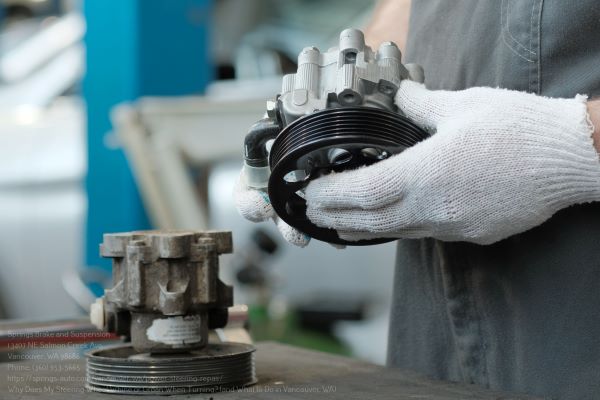
Contaminated or low-power steering fluid is the most common cause of whining noises. Our technicians examine:
- Fluid level
- Fluid color
- Presence of metal shavings
- Signs of fluid contamination
- Odor (burnt fluid indicates overheating)
A fluid flush may resolve the noise if no significant damage has occurred. Prices vary depending on the fluid type and the sourcing of materials.
2. Inspect for Fluid Leaks
Fluid leaks are one of the most common causes of power steering issues. They often appear around pump seals, steering rack seals, high-pressure or return hoses, and at various clamps or connection points. When fluid escapes, the system loses pressure, forcing the pump to work harder and creating whining or groaning noises. Identifying and repairing leaks quickly is essential to prevent complete system failure.
3. Evaluate the Power Steering Pump
The power steering pump should be examined for signs of internal wear. When the pump’s bearings or vanes begin to fail, the system may produce high-pitched whining, groaning when turning, or noise that increases with engine speed. If the internal wear is significant, replacing the pump may be necessary. Costs will vary depending on your vehicle’s manufacturer and parts availability.
4. Inspect the Steering Rack and Tie Rods
A worn steering rack can cause knocking, squealing, jerky steering, dead zones in steering feel, or groaning under load. Worn tie rods can also cause steering imprecision and contribute to unusual noises. Because these components directly affect handling and alignment, keeping them in good condition is critical for safe and smooth steering performance.
5. Confirm Whether the Vehicle Uses EPS
For vehicles equipped with electric power steering (EPS), specialized diagnostic equipment communicates with the vehicle’s onboard computer to identify electronic faults and evaluate the motor, torque sensors, control modules, wiring, and connectors. Many modern vehicles experience steering noise due to EPS motors working under load or from bearing wear inside the electric assist system. Proper EPS diagnostics help pinpoint these issues accurately.
6. Avoid Driving if Steering Effort Increases
If your steering suddenly becomes stiff, jerky, or harder to turn, it’s important to stop driving and seek service right away. A loss of steering assist can happen quickly and without warning, creating a serious safety risk. Immediate inspection can prevent further damage and keep you safe on the road.
7. Schedule Professional Auto Service
Because hydraulic and electric steering systems involve high pressures and sensitive components, DIY fixes often cause additional damage. Professional service is the safest approach. At Springs Brake and Suspension, technicians specialize in power steering repair in Vancouver, WA, offering same-day service when possible, a 3-year/36,000-mile warranty, electric rental vehicles, ASE-certified technicians, and exceptional customer care. Their team ensures your power steering system operates smoothly and reliably.othly, quietly, and safely.
Get Expert Power Steering Repair You Can Trust
Steering noises are more than just an annoyance—they’re warning signs that your power steering system needs attention. Whether the issue is contaminated fluid, a failing pump, worn hoses, or a damaged steering rack, catching the problem early can save you money and protect your safety on the road.
If your steering wheel whines, groans, or feels stiff, don’t wait for the problem to worsen. Springs Brake and Suspension today for expert power steering repair in Vancouver, WA, and experience the difference of skilled technicians, transparent communication, and high-quality automotive repair.
Other Automotive Repair Services We Provide
- Alignment Shop in Vancouver, WA: Professional wheel alignment services to ensure smooth handling, extended tire life, and proper steering response.
- Brake Repair in Vancouver, WA: Expert brake inspections, repairs, and replacements for reliable stopping power.
- Lift Kit Installation in Vancouver, WA: Professional lift and leveling kit installations to enhance vehicle stance and off-road capability.
- Suspension Service in Vancouver, WA: Comprehensive suspension inspections, shock replacements, and repairs to improve ride comfort and control.
power steering repair near me in Vancouver, WA
Do You Need Power Steering Repair?
Don’t wait—Call us and see the difference professional care makes in your driving experience!
